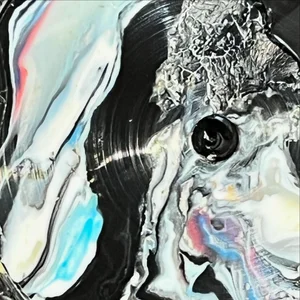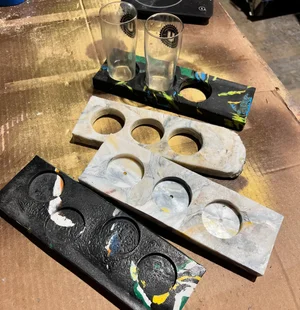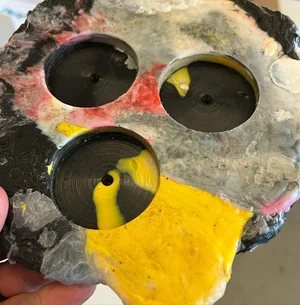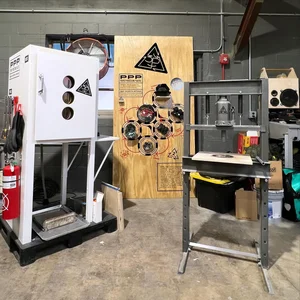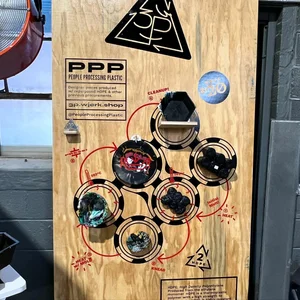
3P — People Processing Plastic — is a collaboration between Kristian Bjørnard, Chris Attenborough, and the product design department at the Maryland Institute College of Art. Designer objects, produced with repurposed HDPE and whatever other found plastic could be procured. Still a work in progress.
The critique
Plastic is a remarkable material, it can do almost anything. It’s also potentially highly recyclable. In practice however, it’s treated as just trash: seen as so low-value that no one’s put in the effort to make it worth collecting and reusing properly. So, it ends up out in nature, where it’s not just clutter but poison. Part of the project's job is explaining the proliferation problem to people directly.
Starting from Precious Plastic
3P drew its approach from Precious Plastic, an open-source, commons-based project for designing and building plastic grinding and melting machinery — the tools to turn found plastic into new objects and materials.
The research that built our version is open too. Extruder specs, how HDPE behaves when it melts, machine listings, other people’s build videos. 115 blocks on Are.na, going since 2019.
Ad hoc machinery
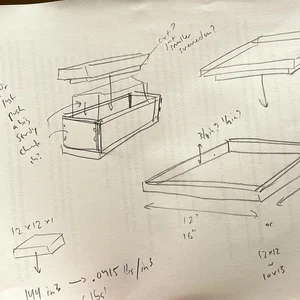
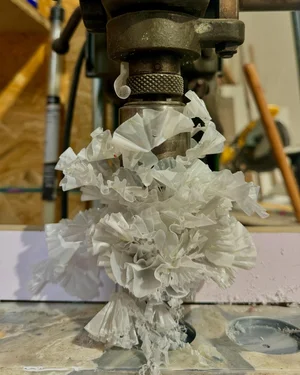
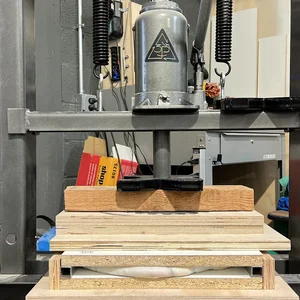
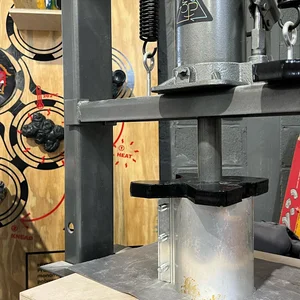
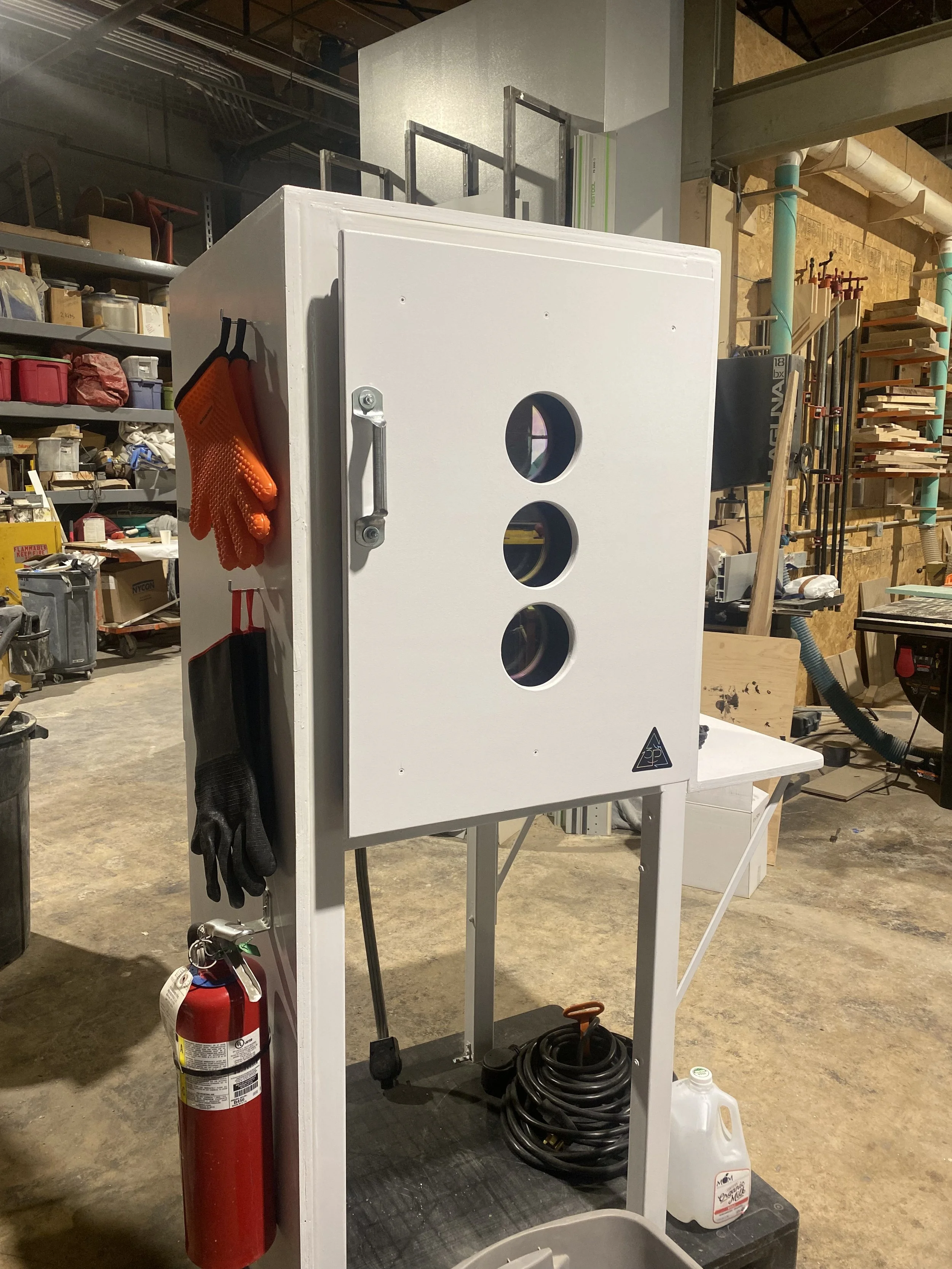
The machines for remaking plastic were built the same way as everything else — from as much found material as possible. The oven started as a home oven, stripped of its case and rebuilt. The grinder had its teeth cut from new steel, but everything else was assembled from whatever was on hand. Molds and other tools got made as they were needed, often repurposed from kitchen equipment that could already handle the heat.
The station
The whole setup is palletized and built to travel — site to site, processing plastic in place rather than shipping material somewhere else to be handled. It's meant to stay simple enough that anyone can run it. Part of the ongoing question is material: what's actually useful to make, what benefits from being HDPE specifically (renovation parts, everyday objects), and what can be molded without complicated tooling or extra machinery.
Performance as method
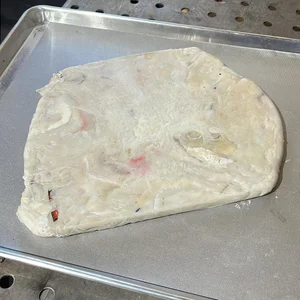
The project grew into something closer to performance than production. Grinding, melting, kneading, molding — done in public — mattered more than any single object coming out of it. It gave us a platform to talk with people about why plastic needs to come out of the waste stream, and why it needs to be made desirable and valuable again instead of disposable.
What it became
3P turned into a curricular foundation for a circular economy class at MICA that’s since run for multiple semesters, and the product design program has built its own plastic recycling machinery to keep exploring — and performing — these ideas.
Still growing
The collaboration keeps expanding — currently working with MICA colleagues Karl Williamson and Justin Beitzel, on more projects and equipment building off of this 3P starting place with Christopher. A related offshoot is in progress too: a script for a play about plastic recycling and the circular economy, which will also get printed as its own zine/booklet.
Follow along
Chris Attenborough has his own writeup of the project. For performance and processing dates, follow @people_processing_plastic on Instagram.
What the project reads and argues with sits in a second channel: other people’s machines, plastic policy, recycling that works and recycling that doesn’t. 124 blocks, open on Are.na.